Visualizing Different Wests
Drawing on the rich archival, museum and faculty resources at the University of Oklahoma, this four-week residential institute for higher education faculty explores the visual imagery and material culture that shaped ideas about the American West since the nineteenth century, including paintings, sculptures, maps, lithographs, clothing, films, photographs, and museum exhibits.
Reinterpreting Western Pasts
For white Americans, the West emerged as a place of economic and spiritual restoration where democracy flourished. For “new” European immigrants and thousands of African Americans fleeing Jim Crow politics in the American South, visual advertisements marketed the West as a space to remake, thrive, and realize either a path to citizenship or personal freedom. Handbills extolling the virtues of a “new Canaan” and plat maps of planned autonomous communities were part of the region’s visual rhetoric.
The act of reinterpreting images is part of the archival turn that questions most Euro-American models of the archive and their limitations for the BIPOC community. The Institute envisions ways their stories can be reclaimed. In doing so, we foreground cultural practices, such as those of Native artists, for example, which further complicate the story.
Seeing Tensions in the Landscape
Even the sculptural landscape on OU’s campus encapsulates the conflicting approaches to how we understand and engage with the concept of the American West. Navajo artist R.C. Gorman, for example, uses simple but bold lines in his statue, “Winona,” to center Indigenous women in western society and on this land. Alternatively, sculptor Paul Moore intended “The Sower” as a metaphor for the university’s role in spreading seeds of knowledge, but it presents as its symbol settlers who joined the land rush.
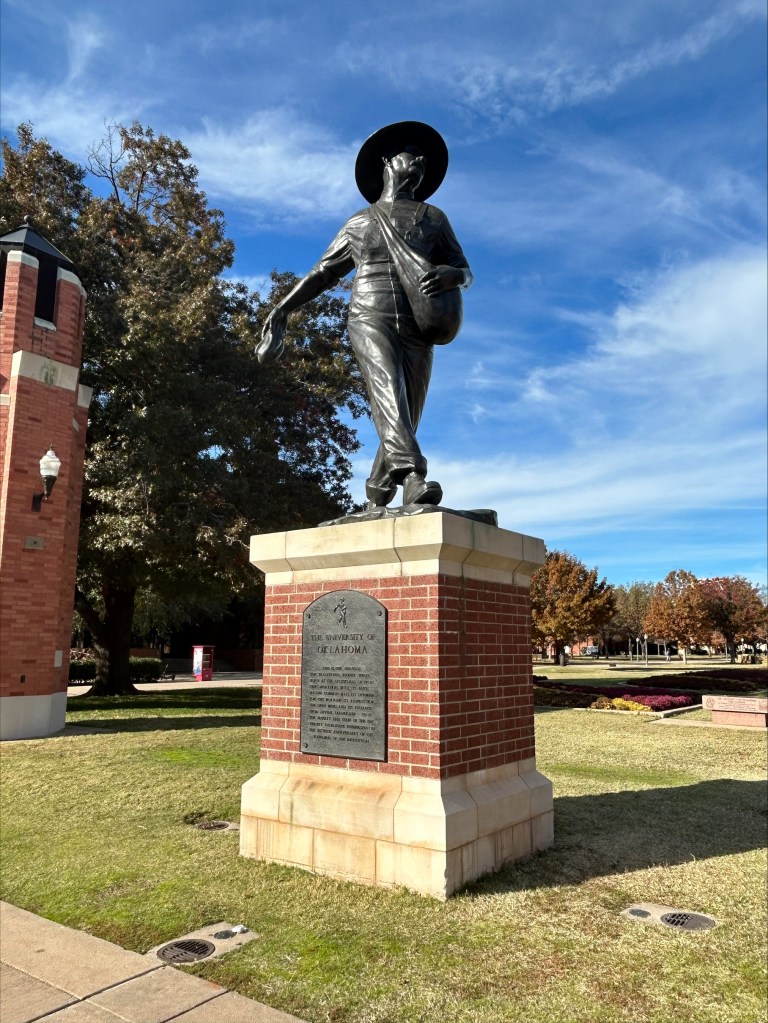
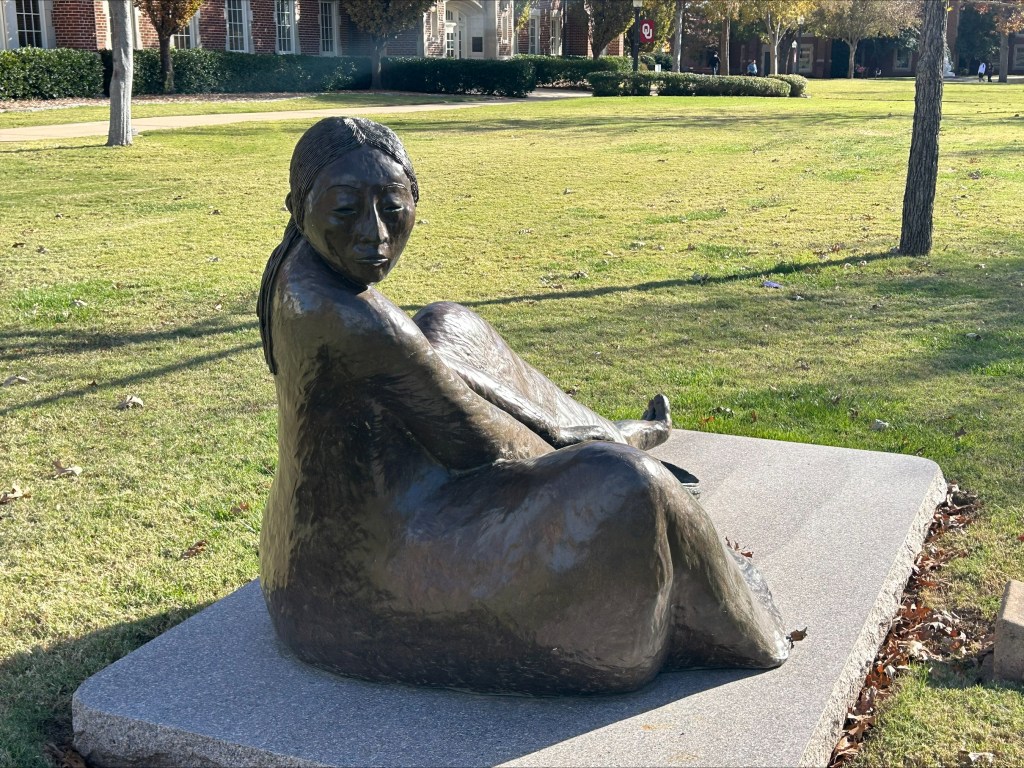
The West that emerges – which we center in our Institute – pays greater attention to the complexities of Indigeneity, race, gender, sexuality, freedom, and nature and to new methods of communicating research about the West in visible forms.
At the Institute
Format and Schedule
Participants will follow discussion of shared readings with workshops in one of OU’s archives or museums most morning. Participants are free to pursue their own research in these facilities most afternoons. Please find the tentative schedule HERE.
Field Trips
We also include field trips to the First Americans Museum in Oklahoma City, Tulsa’s Greenwood District, historic Black towns, rural post offices with New Deal murals by Indigenous and settler artists, and the Concho Indian Boarding School whose buildings have been reclaimed for Indigenous artwork. And there will be an optional walking tour of OU’s sculptures and icons.
Participant Projects
Each participant will pursue a research project during the institute. The projects may be continuations of work already begun and need not be completed during the institute. These projects may develop new teaching materials, promote the participant’s growth as a scholar, or both.
Use of materials from archives and centers at the University of Oklahoma will be expected in participants’ research, and meetings with faculty and library staff are strongly encouraged. The creation of web resources resulting from individual research projects will be welcomed.
In the opening days of the institute, participants will meet individually with the directors to discuss their projects and resources at OU that will support their research. The co-directors also will hold regular office hours during the Institute.
During the final two days of the institute, each participant will present their work to the group more formally.
Housing
Participants are responsible for locating their own housing during the institute. Norman and Oklahoma City offer different housing options, including ones that might be found through Airbnb, VRBO, or similar services. These services offer options between $1600 and $2800 for four weeks. As Norman is a “university town,” more housing options will appear on these services closer to the summer. Once selected, participants also will gain access to a protected page where we list faculty homes available for summer rental and some campus options.
 Visual Wests NEH Institute